Akhund of Swat was the King of Swat English before he was a Sufi who led his people. Later, after the English conquest, the English made his son Jehanzeb Wali (owner) of Swat and in 1969 came in Swat full control of the Government of Pakistan.

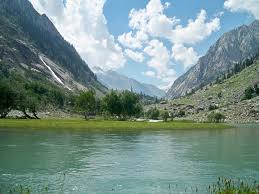


MAHODAND LAKE
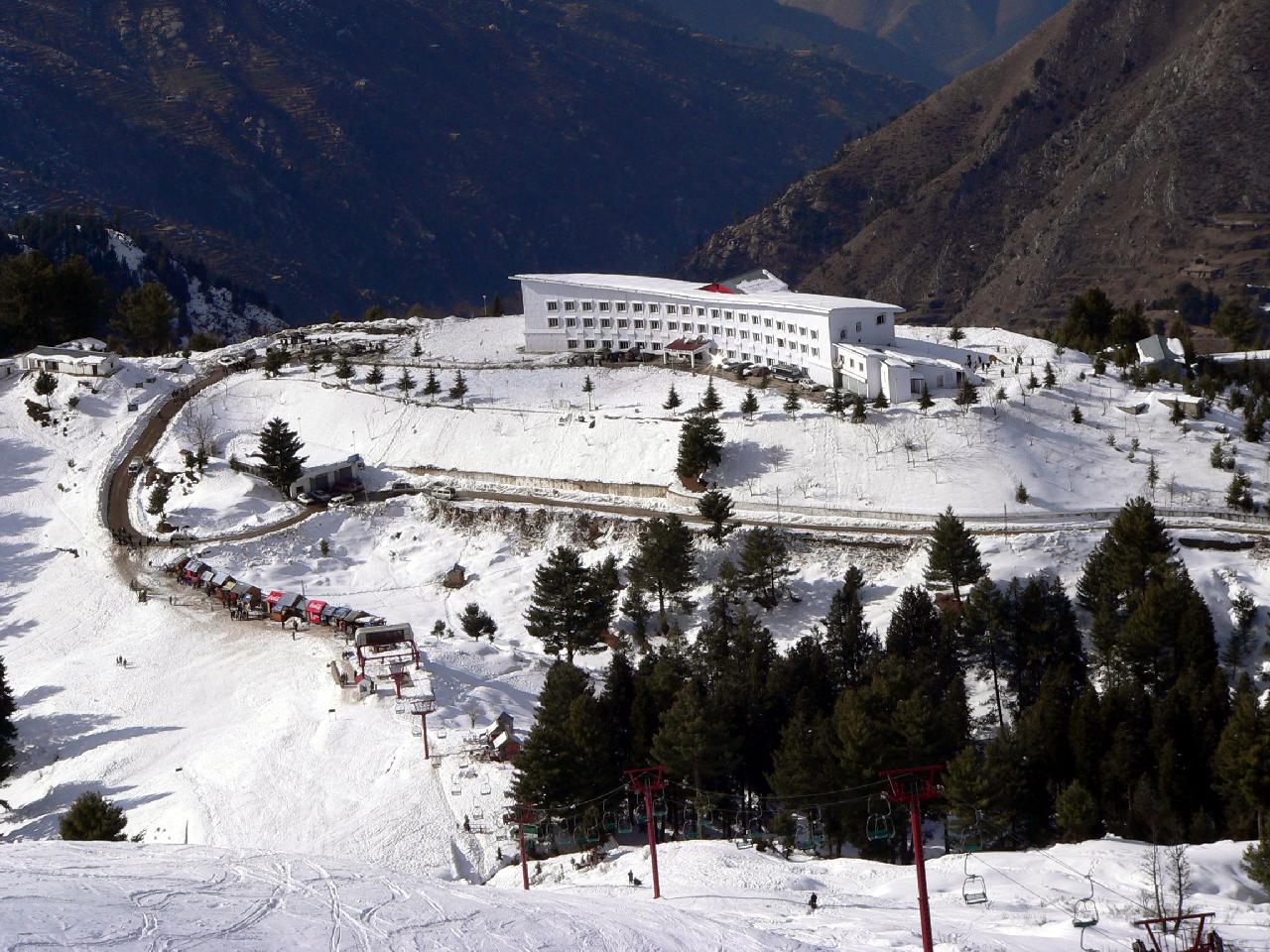
MALAMJABBA IN WINTER

The lush green and historic Swat Valley lies between 34°-40′ to 35° N latitude and 72′ to 74°-6′ E longitude and is part of the Provincially Administrated Tribal Area (PATA) of the North-West Frontier Province of Pakistan. The valley is an integral part of the strategic and significant region where three parts of the Asian continent–South Asia, Central Asia and China, meet.
The names found in ancient sources for Swat are Udyana and Suvastu because of the scenic beauty of the valley and the name of the river respectively.The historical and cultural remains of the area provide evidence about human activities covering a large span of time.
Alexander the Great came here in 327 BC en route India and conquered Bazira and Ora. At his departure the inhabitants of the area threw off Greek yoke, and enjoyed either independent or semi-independent status subsequently. In the meantime Buddhism penetrated here and Swat became center of Buddhist/Gandhara civilization. The Turki Shahis incorporated Swat in their kingdom but at the decline of their power it remained exposed to Hindu Shahis’ influence.
In early tenth century CE/AD, the Muslims occupied Swat. Consequently, Afghans from different tribes, commonly called Swati Pukhtun, came and settled here. They remained independent of the neighboring powers.
The Yusufzais conquered Swat in the first quarter of the sixteenth century and emerged and remained dominant segment. Instead of forming a government they lived in the tribal fashion, divided into two dalas (factions) headed by their own tribal chiefs called Khans and Malaks. The Swat Yusufzai enjoyed freedom and neither had paid taxes to Delhi or Kabul not yielded obedience to any foreign law or administrative system. They fought Akbar's mighty arms for years and incurred great losses over them.
The people of Swat not only fought the British in the historic battle of Ambela in 1863 but frequently raided British controlled territories and provided asylum to anti-British elements. When British forces were sent against Umara Khan of Jandol to relieve their garrison in Chitral in 1895 the Swatis commanded all the three main passes leading to Swat: Morah, Shahkot and Malakand. In spite of tough resistance, the British, however, succeeded in making their way by a stratagem. They established garrisons at Malakand and Chakdara and created the Agency of Dir and Swat, commonly called Malakand Agency, in 1895 for protecting their strategic interests. Political Officer later Political Agent was posted in Malakand for dealing and communicating through him with the local states (Dir, Chitral and later Swat as well) and the tribes. The rulers and tribal chiefs in the Agency were paid subsidies for pro-British services and role. The Swatis, however, rose en mass in 1897 to oust the British from Malakand and Chakdara under the leadership of Sartor Faqir, but in vain.
The left-bank lower valley was brought under loose British control and protectorate in 1895, but the rest of the left-bank valley continued to enjoy independent status till the emergence of Swat State. The right-bank valley was, however, already made part of Dir State during the years 1879–1881 and hence remained part of Dir State since then but with the interval for the years 1907–1911. The Shamizai, Sebujni and Nikpi Khel sections, however, made common-cause and put an end to Dir’s authority over the area, in March 1915. They constituted five-member council to look after the affairs of their area and finally brought Abdul Jabber Shah from Sithana and installed him as king of Swat, 24 April 1915.
Abdul Jabbar Shah remained in power for more than two years, but on 2 September 1917 the jargabroke relations with him and asked him to go back. On his departure the jarga installed Miangul Abdul Wadud as the next king. He ruled till 1949 and extended and consolidated the state. He abdicated in favor of his son Miangul Abdul Haq Jahanzeb on 12 December 1949, with which Jahanzeb became the next ruler and ruled till the merger of the state in 1969.
During Abdul Wadud and Jahanzeb’s reign Swati territories forming part of Swat State enjoyed an amazing peace and development in the fields of education, health and communication.
Shanku and Bashigram Valleys:
Both the valleys of Shanku and Bashigram are located near to each other. Shanku is situated on the right side of the stream above the road. Most of the house are built on the mountain terrain and are scattered far and wide. The maximum to reach this charming valley from Madyan is thirty minutes in a vehicle. The area is provided with all basic facilities of telephone and electricity. There is a small market place where every thing of daily use can be easily procured. Most of the people are involved in farming but the new generation is evolving and is taking interest in education and modern professions. The population of the area is exceeding 1500 according to 1998 census. The surrounding mountains are covered with dense forests and foliage, which provides ideal habitat for several species of wild animals and birds. Kohistani is the major language spoken in the area but everyone understands Pashto.
Bashigram Valley
The sprawling valley of Bashigram is the last village on the road. The houses are built like gigantic steps on the uneven landscape of the mountain. The total time to reach the valley from Madyan is forty minutes as the road is not in good condition. Several other small hamlets surround the valley, which can be approached by trekking for an hour or a half. The track to Bashigram Lake starts from this village and that’s how it has taken its name. Lush green forests surround the valley, which receives heavy snowfall. Several springs and streams scattered throughout the valley. Electricity and telephone facilities are available in the valley.
The People
The area is no more secluded and the people visit the nearby town of Madyan almost on daily basis to merchandise their goods and buy the daily consumable items. The communication gape that once isolated these areas no more exists. The population of the area including all surrounding villages exceeds 2000 and the area has formidable vote bank. Less than twenty percent of the people are educated but the trend is changing slowly and the new generation is diverting to literacy. Most of the inhabitants live permanently here while the adjoining hamlets are deserted during winter and are occupied in the summer again.
Culture
The people are very hospitable and welcome everyone in their beautiful locale. Most of the people rely on farming and grow maize and off-season peas, which pick them lucrative prices in the market. The people speak both Pashto and Kohistani languages but the latter is the dominant language in the area. Their dialects are different. The people are very traditional and some old customs related with matrimony are still followed there. Some small shops in the area provide the daily consumable items. Due to harsh and hard surrounding and life, the people are physically rough and tough, and their complexions sunburned as the area is situated at a fairly altitude from sea level. The beauty of the valley and hospitality of the people are some of the wonderful memories, which the visitors take back with them after visiting the rustic and pastoral locale of Bashigram.
Mahodand Lake (Pashto: د ماهو ډنډ - "Lake of Fishes") is a lake located in the upper Usho Valley at a distance of about 40 km from Kalam, Swat District,Khyber Pakhtunkhwa province of Pakistan Administered Kashmir. The lake is accessible by a four-wheel drive vehicle, and is often utilized for fishing and boating.[1]
Mahodand Lake (Pashto: د ماهو ډنډ - "Lake of Fishes") is a lake located in the upper Usho Valley at a distance of about 40 km from Kalam, Swat District,Khyber Pakhtunkhwa province of Pakistan Administered Kashmir. The lake is accessible by a four-wheel drive vehicle, and is often utilized for fishing and boating.[1]
Geography[edit]
The Mahodand Lake lies at the foothills of Hindu kush mountains at an elevation of (9,603 ft), surrounded by the meadows, mountains and denseforests. Similarly, the banks of Mahodand lake are covered by pines and pastures that serve as a camping site during the summer.

The Mahodand lake is fed by melting glaciers and springs of the Hindu Kush mountain and gives rise to Ushu Khwar, the major left tributary of the Swat River.
Flora and fauna[edit]
During the winter, the Mahodand lake freezes and is covered by heavy snow. In the summers, the basin of the lake is surrounded by a sheet of alpine flowers likegeum, blue poppy, potentilla and gentian. Apart from it, the lake is encircled by diverse pinus species which serves as abode for wild birds. Similarly, the lake contains abounding trout fishes, which furnish ideal opportunity for angling, but catching is allowed only to the licensed anglers.[2]
Fishing and camping[edit]
Visitors fish and camp at the lake. The waters of Mahodand lake are divided into a series of small and large streams, which once swarmed with brown and rainbow trout introduced by the former ruler of Swat State. Over-fishing by the locals for daily income, along with the illegal use of fishing methods like electrocution, dynamiting, and large nets, have significantly reduced the fish population.[3][4]
MAHODAND LAKE
Malam Jabba (also Maalam Jabba, Urdu: مالم جبہ) is a Hill Station in the Hindu Kush mountain range nearly 40 km from Saidu Sharif in Swat Valley, Khyber Pakhtunkhwa, Pakistan. It is 314 km from Islamabad and 51 km from Saidu Sharif Airport.

Malam Jabba is home to the only ski resort in Pakistan.[1] The area also contains two Buddhist stupas and six monasteries that are scattered around the resort. The presence of the monuments at such a height indicates that the area has been inhabited for over 2000 years.
Two trekking trails are located near the Malam Jabba resort. The first passes through the Ghorband Valley and Shangla Top and starts about 18 km from the resort. The other trail passes through the Sabonev Valley and is about 17 km from the resort.
MALAMJABBA IN WINTER

No comments:
Post a Comment